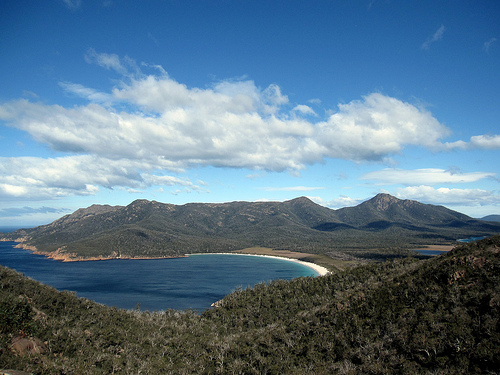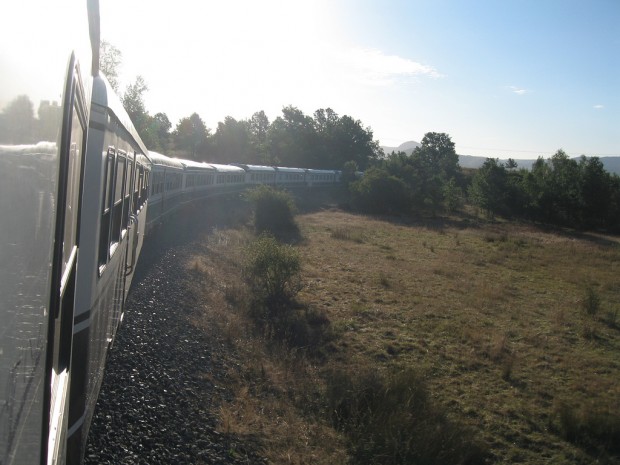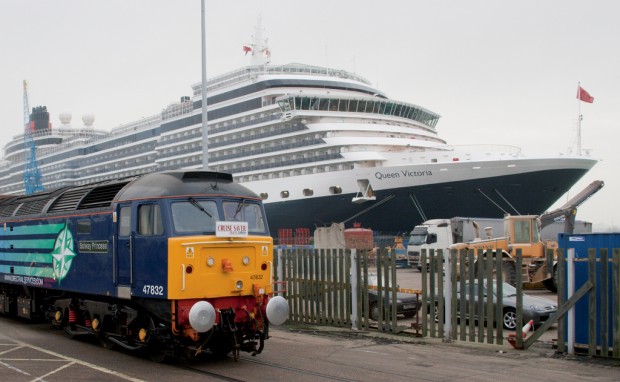
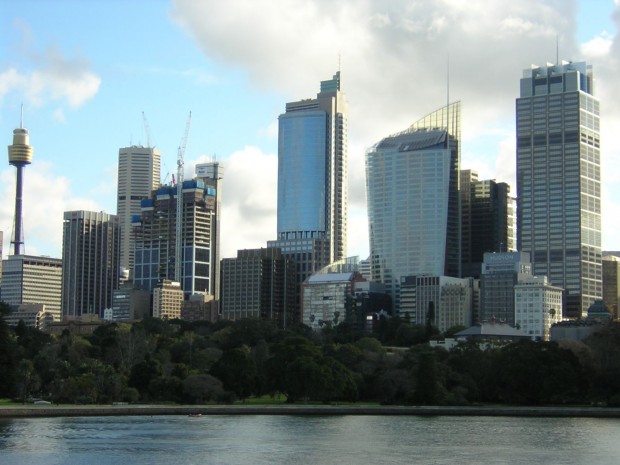
Traditionally taking in country routes and difficult terrain, a backpacking holiday was once the mainstay of students or those taking a sabbatical from the world of work. Nowadays whilst the rural retreat might still exist as a backpacker’s dream, the same can also be said for cityscapes. So, which is best? Continue reading

Standard
July 6, 2013 by DontFlyGoFive Eco-Friendly Spots in London

Students, don’t overwork your brains to the point of exhaustion – learn how to have fun while preparing for your TEFL London exams. All work and no play makes Jack a dull boy indeed, and too much studying will do you more harm than good. So store away your books for awhile, put your trainers on, and explore the sights and sounds of London. This city has so much to offer, especially for fans of green and eco-friendly tourism. Here are some of the “greenest” places which you can visit in the city: Continue reading →
Standard
June 27, 2013 by DontFlyGo5 Australian Adventures You Shouldn’t Miss

With the varied landscape and the rich biodiversity, Australia is one of the most interesting destinations for individuals with adventurous spirits. There is much to do whether you are looking for outback getaways, adventures within city limits or eventful trips to the country. But, before you go rushing to the next thing that will pump adrenaline to your veins, stay on the safe side and be sure to obtain an Australian travel insurance. Once you are all set physically, mentally and emotionally for something another awe inspiring trip, be sure to consider a trip to the following places:
Horizontal Falls, Kimberley Coast, Western Australia. The rushing waters in the gorge in Kimberly Coast will make you feel as if you are seeing a waterfall, hence, the name of the place. There is much to see and experience when you are in the vicinity. You can take a ride on a 14-seater luxury sea plane people and fly over the Buccaneer archipelago’s 1000 islands. Your plane ride ends at Talbot Bay where the gorges that makes up horizontal falls can be found. To experience horizontal falls up close, you can ride Jet Stream, the fastest boat in Kimberley. The gorges may look like white rapids from afar but the water here is actually falling making your boat ride one adventurous ride.
Hancock Gorge, Western Australia. Twisting through Pilbara Hills, Hancock Gorge looks like a huge cleavage with a drop that is enveloped in darkness. With its location in Kirijini National Park, Pibara region, having a 4 wheel drive is ideal. From above, the gorge is an intriguing sight and braving this gorge will require an adventurer to climb down the ladder which is bolted on the rock floors. Following a creek on the canyon floor, the trip leads to a sight of ever increasing gorge walls and ultimately narrows into a small opening that leads to chest-deep waters then to a pebble lined beach. The ever narrowing gorge makes it necessary to go down in hand and foot until the gorge opens up to an emerald pool which is concealed in the shadows.
Crocosaurus Cove, Darwin, Northern Territory. If you are looking for an Australian adventure that will make your throat feel raw how about a close nose to snout encounter with a deadly saltwater crocodile? Casual swims are not allowed in Darwin but you can experience a close encounter with a croc in the acrylic cylinder lowered by monorail to an enclosure where an adult crocodile is housed. The 4 centimeter cage of death is big enough for two people and the croc won’t wink and smile, instead, you’d be spending the next 15 minutes with a nervous grin as your leathered host attacks the cage with intent. Located in the corner of Peel and Mitchell in Darwin, the Cage of death runs 10 times every day.
Mossman River, Queensland. Biodiversity has never been an issue in Australia and when looking for an adventurous jaunt in the country, snorkeling in the World Heritage Wet Tropics is surely an unforgettable experience. Hitting the deep water in the Mossman River is aptly called drift-snorkeling because you don’t require flippers for this underwater adventure. The waters are grazed by turtles while the surrounding forest is filled with music from the river tinkles, the whooping birds and the buzzing cicadas. The serene sound from one of the world’s oldest rain forests is surely something to add to your bucket list.
Whitsunday Islands, Queensland. Braving the seas is one of the most adventurous things to do especially when you are not a sailor. But, you can go sailing in a million dollar vessel after a 4-hour briefing in Whitsundays in Queensland provided you respond to respond to a radio twice a day to give your location. After filling the vessel with companions and provisions for the trip, you can make your way to various bay islets in Whitsundays. If you ever get the urge to go bare boating, be sure to book a vessel in advance.
Photo Credit: rapidtravelchai
Standard
June 26, 2013 by DontFlyGoSlow Travel around America

When it comes to traveling the US, there is always more than one option of where to go and what to do. You can certainly choose to travel to one of the world-famous cities such as New York, Boston, Miami, San Francisco or Los Angeles and spend a few days there. It will certainly make for an exciting experience for sure but really getting to know a country as vast as the US requires much more than just a few days in one of its cities.
From the idyllic beaches, searing deserts and stunning national parks to the great shopping opportunities and nightlife of the world-renowned cities, there is no doubt that the US is one of the most diverse countries in the world. Hence, while it may be tempting to fly from one place to the next, going on an extensive road trip is a much better option to see and experience the whole variety which the country has to offer. It is certainly the best option to get to know the American countryside, endless highways and quaint small towns. It is certainly not uncommon for people who have traveled broadly around the US to at least think about moving there permanently. The diversity of people, cultures, landscapes and lifestyles combined with a high standard of living still make it an attractive option for migrants from all over the world.
Migrating to the US
However, when planning to move to the US, there is no way around the often complicated visa regulations. For travelers, the rules are still quite straightforward. With the Visa Waiver Program, which is available to citizens of 37 countries, one can visit the US for up to
90 days. When aiming to move to the US permanently or work there, there are a variety of visa options. One of the easiest ways of gaining residency and working rights is certainly the US Green Card Lottery System, with more information on the procedure available here. The participation requirements are a total of 12 years of school education or two years of experience in a field that requires two years of training. With a bit of luck one may soon be packing one’s bags and booking that one-way flight ticket to the US.
Photo Credit: Bernt Rostad
Standard
June 24, 2013 by DontFlyGoOn the Rails: Why it’s Best to Travel by Train

By Andrew Tipp
What kind of traveller are you? If you’re reading this blog, you’re probably pretty conscientious. And thoughtful. You care about how you impact other people. And the planet.
One of the big ways we impact both humans and the world around us is through transport. We’re always looking for better ways to travel. We want travelling to be greener. Cheaper. More enjoyable.
So what’s the best way to go? How can we optimise our travelling experience and reduce the detrimental effect it can have? Here are a few reasons why train travel might be the way to go…
Train travel can be greener

We know that the way we get to work or our next holiday can have a significant effect on the environment, so we’re always looking for alternative transport that’s more eco-friendly.
Trains can be more energy-efficient per passenger per miles than planes or cars. Plus, more people using trains means less cars and buses clogging up the roads – further reducing the fuel efficiency of road vehicles.
A key factor is carbon emissions. Train emissions are not released directly into the atmosphere, making it a cleaner way to travel. Doing a typical European train pass route by car can produce up to three times as much CO2 per person. Doing the same route by plane can produce up to four times as much CO2 per person. You can work it out for yourself by using a CO2 calculator.
While we always have to be careful when considering the way we count the carbon footprint of different transport models – do you include car factories and building train stations? – evidence suggests that train travel really could trump other forms of transport.
Train travel can be cheaper

Over the last few years, European airlines hit the headlines by offering flights for just a few dollars. But this golden age of cheap air travel seems to be coming to an end. While pretty cheap tickets are still available, the costs are usually recouped by airlines through ‘extras’ – booking fees, check-in fees, baggage fees, etc. There’s probably even a fee for having to add fees.
By contrast, train travel can be a cost-effective way of travelling – especially on longer trips. A European rail pass for up to a month can cost the same amount as just one return flight between European cities – and the rail pass effectively allows unlimited travel within its timeframe.
To travel around Europe by car for several weeks could also prove far more expensive that getting a train pass – unless you could share the cost with enough people. And we’re probably talking a lot of people.
Travelling by train also allows you to take overnight trips – saving on accommodation costs – and often takes you direct into the hub of a city, which cuts out paying for taxis and airport shuttles.
Train travel can be more enjoyable
But perhaps one of the best reasons to travel by train has nothing to do with its eco credentials or cost-effectiveness. Travelling by rail is often just a much more fun, rewarding experience.
Both car and plane have their respective nostalgic heydays, but train’s romantic past pre-dates them both. Travelling by train evokes its own distinct spirit of adventure. It’s a civilised and leisurely way of seeing the world. Gentlemanly, almost.
On the rails you get to actually see places as you pass through them. And unlike driving, you have the luxury of giving it all your full attention. Travelling by plane gives awesome views, but it’s train travel that’s the most immersive.
There are also very practical reasons for opting for trains. They’re far less hassle, for a start. You don’t have to turn up crazy early and go through a zillion security checks. They allow you to switch off, relax or even sleep – something you can never do in a car. Finally, they usually take you right into the heart of cities instead an airport 10 or 20 miles away.
So there you have it – some of the best reasons you should think about using trains for your next trip. Obviously, there are pros and cons to every type of transport. There are plenty of things you could say gives travelling by car the edge over rail. But, on balance, I think the case for preferring rail over tarmac and landing strip is pretty strong.
What do you think, guys? What’s your favourite way to travel? Leave your comment below…
About the author
Andrew Tipp is a writer, blogger and editor. He spent his gap year volunteering in South Africa with Gap Activity Projects, and has worked as a travel editor for advice and community site gapyear.com. In total he’s spent more than a year backpacking and volunteering around the world, and his favourite countries are Bolivia and Sri Lanka. Central America and the Malay Archipelago are currently top of his to-do list.