
Don't Fly Go!

  • Home
  • About
  • Contribute
  • Work With Us
  • Contact
Don't Fly Go!
  • Features
  • Green Destinations
  • Overland Travellers
  • Alternative Transport
  • Volunteering

Travel Tips

Archive

February 11, 2017 by Chase Vandros

Eat Your Way Around Europe

Holidays are a chance to explore and immerse ourselves in different cultures and ways of life. The best holidays broaden the mind, but also our waistlines! Food plays an important role in many cultures. It can tell us about their traditions, their history, and how they live their lives. From essential oils in Italy to snails in France, it’s worth exploring Europe from the inside of a restaurant.

Italy

Screen Shot 2017-02-11 at 14.33.21https://pixabay.com/p-1264056/?no_redirect

Italy is a country of opposites. Head to Florence or Venice and you will be surrounded by grandiose architecture, stunning Basilicas, and of course the Grand Canal. If you venture to the lakes, Como, or Garda, you will be met by a more relaxed and less urban vista. With such diverse regions and environments, Italy  is famed for its varied cuisine. In the northern region of Italy is Emilia-Romagna, here you will find the city Modena. This ancient town boasts cathedrals and piazza’s, but it also has strong links to exceptional food. Osteria Francescana is widely considered one of the best restaurants in the world. It holds three michelin stars and can be found sitting unassumingly on a street in Modena. Run by acclaimed chef, Massimo Bottura, the restaurant serves dishes which evoke strong memories for Bottura. Modena is also the home of Modena Balsamic Vinegar, which is sold all over the world. There are plenty of tours, such as Italy Escorted Tours, that allow you to discover this compelling country. Just be sure to sample lots of it’s cuisine!

France

Screen Shot 2017-02-11 at 14.33.28

https://c1.staticflickr.com/5/4140/4892950335_2a15dc74d0_b.jpg

Much like Italian cuisine, French cooking has inspired chefs all over the world. Widely considered some of the most sophisticated food, the French continue to serve up exceptional dishes. Amongst some of the more unusual delicacies are snails, or escargot. Despite what you might think, this starter is more popular in the Catalan region of Spain than France. These edible land snails have been eaten as early as 1892. The French prepare them by removing their shells and cooking them in garlic and wine. Some other national dishes you may be up for trying are croque monsieur, foie gras, and bisque.

Spain

Screen Shot 2017-02-11 at 14.33.35

http://maxpixel.freegreatpicture.com/static/photo/1x/Cooking-Spain-Andalusia-Mussels-Paella-Mixed-Pan-837876.jpg

As well as its favourable climate and laid-back atmosphere, Spain also boasts some of our deli counter favourites! Paella, a Valencian rice dish, has been replicated and adapted all over the world. Although you may find some Paella with chicken and chorizo in, Valencians will assure you that the authentic version is the seafood variety. Spanish cured meats, including Iberian ham, are also something of a delicacy worldwide. The meat comes from black Iberian pigs and is considered by some to be the finest ham in the world. Pincho, otherwise known at Pintxo is northern Spain’s answer to tapas. These small dishes are traditionally served in bars, or whilst relaxing with friends and family. They get their unusual name from the word pincho, the Spanish for spike. All of these bite-sized dishes are skewered with a toothpick to make them easy to eat.

 

Posted in Travel Tips · Tagged cuisine and culture, regional food ·

Archive

February 11, 2017 by Chase Vandros

Sleep Solutions: Strategies to Get Lots of Rest and Relaxation on Vacation

Want to get the Rest and Relaxation on Vacation you deserve? Start by looking into your bed...

Photo by CC user aarongustafson on Flickr.

Science has consistently demonstrated that we all need a break from time to time, simply to relax and recuperate from the stresses of everyday life. And what better way to do this than taking a vacation!

However, whilst most of us can’t wait to get away from familiarity and stay in a new place for a couple of weeks, biological studies have shown it’s very common to experience a troubled night’s sleep for at least the first night. This can completely throw you off-guard, leaving you tired and unable to fully relax and enjoy your vacation like you should. So, if you’ve experienced trouble sleeping in a new place and want to do something about it ready for your next getaway, read on to discover some sure-fire strategies you can use!

Opt for tranquil room designs

As studies have shown the significant sleep problems associated with sleeping somewhere new and unfamiliar, a major contributor to avoid this happening is the actual surroundings of your destination.

When booking a vacation, you’re almost always able to see photographs of the room you’ll likely be staying in. Avoid bright, bold colors and opt for hotels that aren’t in loud neighborhoods. Both noise and appearance are likely to contribute to whether you sleep well or not, so going for a location featuring neutral, calming colors with quiet surroundings is a great strategy to improve your chances of ultimate rest and relaxation.

Alarm Clock for Me

Sometimes quiet and peaceful surroundings aren’t quite enough, and you may require the aid of technology to give you that extra sleep stability. Alarm Clock for Me, a free app developed by Apalon Apps, is more than just a simple alarm clock.

Featuring an expertly-designed sleep timer, this app will play white noise or relaxing music (dependent on your preference) which have both been clinically proven to induce sleepiness. So, when accompanied with a tranquil room setting, this app is sure to further increase your chances of being delicately lulled to sleep with no troubles. Learn more to discover the other benefits this app has to offer.

Take your own pillow

Often, the simple fact of not sleeping in your own bed can be a major contributor of a bad initial night’s sleep in a new place no matter how tranquil it may seem. So, to give your temporary bed the illusion of still being in your comfortable home setting, replace the fresh pillows with your very own pillow from home.

Both its texture and scent is likely to lull you to sleep and automatically make you feel more comfortable and trouble-free.

The whole point of most vacations is to relax, get some rest, and have some much-needed ‘me time’. But, if sleeping becomes a problem, you may find yourself irritable, tired, and completely unable to fully enjoy every aspect of your time away. But, by implementing the above app suggestion and strategies, you’ll be giving yourself a significantly increased chance of getting one of the best night’s sleep yet!

Jordan Bradshaw is a flight attendant who writes about travel subjects in his articles. From his favorite destinations to how to survive a red-eye flight, his informative articles can be read around the web.

Posted in Travel Tips · Tagged rest and relaxation, sleep, vacations ·

Archive

February 11, 2017 by Chase Vandros

Portable, Powerful and Practical: Revolutionize the Way You Travel with the Top Tech and Apps Today

Revolutionize the Way You Travel by using the best travel apps and tech

Photo by CC user FirmBee on Pixabay

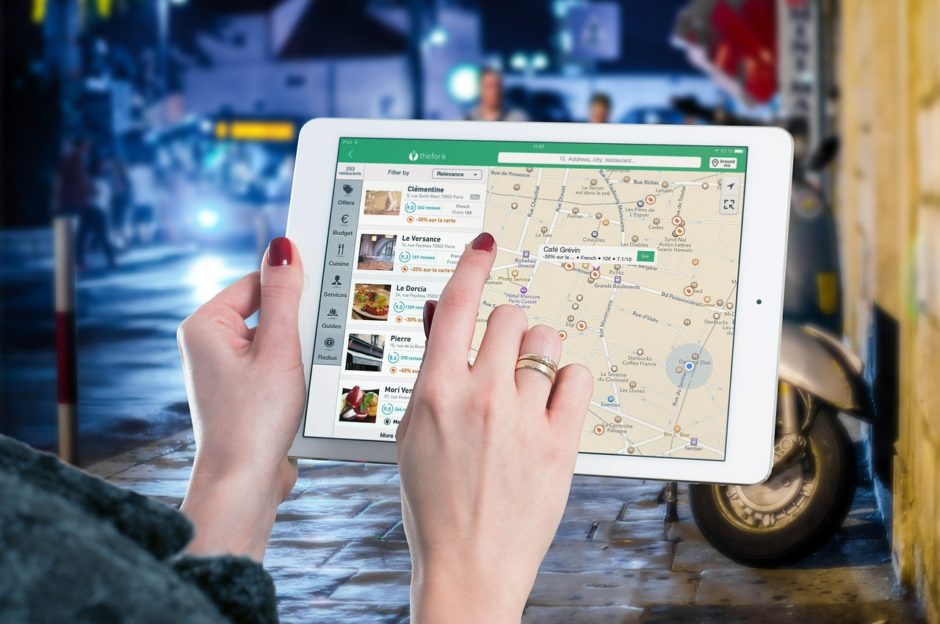
Planning to travel soon? This is the ideal time to download a few handy apps that will simplify your vacation or business trip itinerary.

What the experts say

World renowned travel expert, Rick Steves, knows a lot about travel technology. Must-have Android apps that Steves recommends include Smart Traveler, DB Navigator, and the XE Currency Converter. Launched in 2011 by the U.S. State Department, Smart Traveler offers up-to-the-minute travel information and advisories that may be accessed with fingertip ease. Simply download the app from Google Play or the Apple Store, install and tell it which country you wish to know about. In an instant, you’ll receive relevant data about national relations, the current political climate, and other important news for international travelers.

DB Traveler offers timely info about train travel in Germany. For train information in the UK, try the free TheTrainLine app. XE Currency Converter is just what it sounds like — an easy to use app that helps travelers judge costs and expenses in other countries. If you’ve ever fumbled through your wallet trying to figure out international exchange rates, this is an app you’re sure to use time and time again.

Jetsetter magazine recommends taking something called GoTenna with you everywhere you travel. Small enough to fit in your pocket, GoTenna is a lightweight device that facilitates communication with other people in your travel group. With a range of up to four miles, this invaluable tool is sure to make traveling easier and more efficient for anyone who uses a smartphone.

Where to stay

If you want to save a ton of money on lodging, download and use the AirBNB app. With this handy tool, you can reserve a room in a private residence in more than 30,000 destinations worldwide. Lightweight and portable, AirBNB offers millions of alternative lodging options that can make traveling more affordable than ever, says Android Central.

LoungeBuddy app offers instant info about VIP airport lounges at more than 900 airports around the globe. If you think those fancy lounges are off-limits to the average traveler, do think again. Tell LoungeBuddy about your ticket, the type of credit cards you carry and whether you’re a member of the armed forces. You might have more VIP perks available than you are aware of. If so, LoungeBuddy will let you know.

Duolingo is an app that can help you learn the basic of another language before you travel or while you’re on the road. Explore the learning modules at your own pace and never be at a loss for words whilst traveling.

Will you need an umbrella or a swimsuit?

Of course, you’ll want to know what sort of weather to expect at your intended destination. That’s exactly what Weather Live Free from Apalon does. This weather app is sleek, accurate and very easy to use. Know what the weather’s going to be like anywhere you go, and never over- or underpack again.

There’s a whole big beautiful world to explore out there. Install a few 21st-century travel apps, take the right sort of travel tech along, and enjoy your trip.

Eloise Bailey would describe herself as a globetrotter. Though she’s yet to write that down as an occupation on any application forms, yet!! Read her travel articles around the web.

Posted in Travel Tips · Tagged tech, Travel, travel apps ·

Archive

February 7, 2017 by Chase Vandros

Unusual Attractions To Visit In London

London is famous for its many historic and modern attractions the world over. Apart from the major attractions and landmarks there are numerous other more hidden and unusual attractions as well that are well worth a visit. A holiday in London never has a dull moment because of the countless places to see and events to be part of.

To squeeze the most of a trip to London you need to choose the right location to stay. As distances in London could be extreme and also there is the issue of traffic congestion. To avoid this it is best to stay in the centre of the city or its whereabouts. And there are plenty of London hotels deals, for travellers on a tight budget.

To stay at an affordable price, while enjoying all the perks and comforts of a trendy boutique hotel the Park Grand Paddington Court Hotel London is the perfect choice. Its location smack-bang in the centre of London makes it popular with visitors and tourists to the area.    

Some of the lesser known and more unique attractions worth a visit in London are:

Sir John Soane’s Museum:

London is famous for its world class museums with museums and art galleries to be found in abundance in the city. Another hidden gem is Sir John Soane’s Museum. It has a unique atmosphere that makes it worth a visit. Plus it is housed in the former home of John Soane that is left exactly as the way it was at the time of his death in 1837. There also is his library housed in the mansion.  It has an intimate kind of feel to it which makes it all the more endearing to visitors. Apart from artworks, artefacts, sculptures and furniture there are a lot of other interesting items to be found in the collection.

The museum organises numerous temporary exhibitions at parts of the year. In the past it has included a fine collection of a range of the Bard of Avon’s (Shakespeare) artefacts and rare memorabilia, which included the first four folios of his extensive works. There is no admission fee and it opens from Tuesday to Saturday (10am – 5pm). To arrive there it is hardly a 5 minute Tube ride from Kings’ Cross to Holborn followed y a short stroll to the museum. If you are fond of walking you stroll the way over.

Leighton House:

For those who are keen about Pre-Raphaelite art a visit to Leighton House, located in Holland Park is highly recommended. There you will find a rare collection of oil masterpieces by Lord Frederic Leighton on display. It is located in what was his former home and also features other Pre-Raphaelite artists’ works. It also regularly hosts a number of temporary exhibitions at different parts of the year. E.g. In the past it has featured a Pre-Raphaelite on Paper exhibition of Victorian Drawings, which are part of the famous Lanigan collection.  The studio is itself a rarity, as it was purpose-built for the public to view and it has hosted famous personalities from history, including Queen Victoria. It is veritable treasure trove of art and visitors can explore it on all days (10am – 5:30pm) with the exception of Tuesdays.

Grant Museum of Zoology:

While it may not exactly be in the league of the iconic Natural History Museum, the fact is that the Grant Museum also has fine albeit smaller collection of more than 68,000 specimens. And it is the only university zoological museum in the city.  The Grant Museum was established in 1828, and is home to a vast collection of skeletons, specimens and mounted animals. These include some very unique attractions e.g. The extinct Tasmanian Tiger and the Dodo. It is family-friendly place and opens from 1pm – 5pm, from Monday to Saturday. It is located at University College London in the Rockefeller Building. Just a quarter of an hour walk from St. Pancras Station at King’s Cross.

The Natural History Museum

The Old Operating Theatre Museum:

When we speak of unusual museums this is out of the most unusual of its kind and has some really strange attractions! It originally served as a part of St. Thomas Hospital and is where you will find the oldest operating theatre of its kind secreted in St Thomas Church’s Herb Garret. It is oddly located in the roof of the church which adds to its unique character. This was the place where some of the most gruesome forms of surgery were practised on unwitting patients. And remember this was before the discovery and use of anaesthesia! It opens all the days of the week from 10:30am – 5pm. There is an entry fee to get admission. You can catch the Tube from King’s Cross to London Bridge and then take a stroll to get to the museum in Southwark.

Kensington Roof Gardens:

They are out of the truly most unique gardens to be found in London. After all where could you expect to walk through a doorway in the high street and see fountains and pink flamingos! Its unique location and ambience have made a popular spot for numerous events and it houses a trendy restaurant and club. Visitors can manage a visit during the afternoon hours, when there are no events scheduled to take place. Its famous gardens are concealed right at the top of what used to be a department store, which soars an impressive 100 feet above Kensington Street.  Catch the lift to get to the 1.5 acre gardens that feature a formal Spanish space, a classic English area and even a Tudor Garden. And to add to its uniqueness it has more than 100 trees with a stream, ducks, a pond and pink flamingos. An unusual but none-the-less fascinating place to visit in London!

Kensington Roof Gardens


Posted in Travel Tips · Tagged London attractions, museums ·

Archive

February 7, 2017 by Chase Vandros

Tips for Argentine expats moving to London

For those who are moving to London as expats from Argentina or elsewhere to stay and work in London, it is an exciting challenge. The city and culture in London is a total contrast of what living in Buenos Aires or any other major city in South America is. The good news is that there are a fair number of expats from Argentina and other Spanish speaking countries, which makes it easy to assimilate in the city.

The first challenge is to find accommodation to live in the city. If you are visiting London for the first time and do not have any friends or a place to stay you could stay temporarily at any hotel in central London. You could also keep an eye out for the best London hotel deals available at that time.

There is plenty of London hotel offers to choose from and you can check directly with the hotels in the area you choose to stay or online with hotel booking sites.

London

A good spot to stay in Central London without having to spend a hefty sum on accommodation expenses is The Montcalm London City the Brewery Hotel. It will be convenient to travel to work and also for entertainment and shopping in the city. Once you have a good base to stay you could begin house hunting.

Finding a good place to stay in London can be a bit of a challenge. Of course if you are flexible and open-minded and can devote time and some effort, it is not more difficult than finding accommodation in any other city.  You could choose to share a flat which would be more reasonable in terms of expenses or if your budget permits rent a flat yourself.

Sharing / own space

The good news is that many expats to the city share flats. It is a good way of getting to meet new friends which if you are on your own, is good if you have someone you know and can go around with in the city. IAnd it is a lot more cost-effective that hiring a flat on your own, unless you are earning reasonably well and can convince choosy landlords that you are the right person for their property. Another benefit of of sharing a house is that is mostly includes sharing expenses such as utility bills, which is great if you are new to the city and don’t want the hassle dealing with the bureaucracy all at once.

Rents and location

The rents in the city will be subject to the location you plan to stay in. While it is great to stay in a flat in the centre of London, the fact is that they are bound to be very pricey. The further in the suburbs you stay the lower will the rent be. The downside is to have to travel long distances to and from work. You need to choose a place that is within suitable distance from your work place and well connected through public transport.

While rents are comparatively higher in London, more than that of other European cities, food and alcohol costs much less. It is possible to eat out a few times in the week without incurring too much in terms of cost. This is of course subject to where you choose to eat as eating at any high end restaurants can rack up terrific expenses.

You need to remember that before you rent a place you need to give them a deposit, which could be as much as rent for two months. Apart from that you need to pay the utilities bills and council tax (students are exempt from paying council tax). You need to look around for the best deals and you can search online at rent comparison websites for the same.

Also the many companies and even landlords you have to deal with will try to extract as much money as possible, so be wary of any extra costs. E.g. If they say that you have to foot the bill for cleaning charges when you move out, confirm if that is necessary. And do not get insurance for your mobile unless you really need to. While these seem trivial they do add up a fair bit in terms of expenses.

Transport

The good news is that London has probably the best transport network in Europe. While the Tube can be crowded and not too pleasant during peak hours traffic, at other times it is a convenient and cheap way to get around the city. While the buses are also great to travel, at times because of traffic congestion they seem to take forever to get you to your destination. The benefit of travel by bus is that it offers great views of the city and they are also cheaper than the Tube.

London Bus

And one of the most economical ways to travel in London is by getting an Oyster Card or Contactless travel card. If you need to travel on a daily basis it is a necessity so that you pay the same amount for travel every month. All you need to do is to top-up your Oyster Card with the sum you will be enough to last you for a few days, week or more and you are good to go. You could also use the Oyster Card on the bus and other some other networks of public travel in London. To know more about the routes and costs of travel visit the TFL (Transport for London) website.  There are plenty of apps that you can download to use on your smart-phone, including the London Underground Map, which will help you to navigate the Tube network and around different areas of London. Another option is to go old school and buy a paper A-Z City Guide from a bookstore.

Posted in Travel Tips · Tagged advice for expats, moving to London ·
← Older posts
Newer posts →

Search

All content © 2026 by Don't Fly Go!. WordPress Themes by Graph Paper Press